// For manufacturers running the plant floor

Your plant runs on one person's memory.

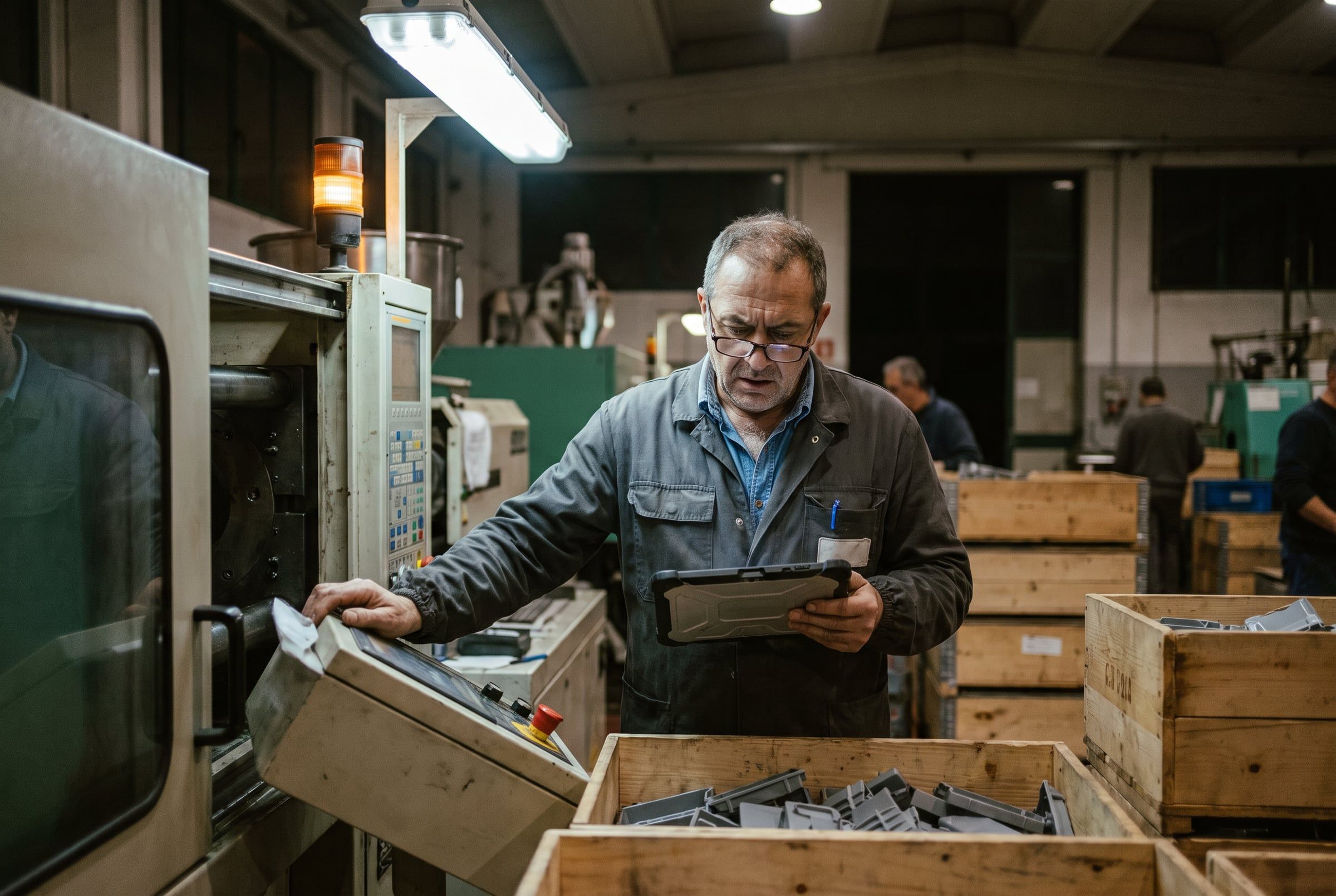
Your floor is full of machines from a dozen makers, each with its own manuals, alarm codes, spares and quirks. When one stops, the operator calls the maintenance veteran who's seen it before, if he's on shift, if he's still here. The procedures sit in binders nobody opens, and the fix that worked is in someone's WhatsApp. ekory turns every manual, procedure, fix and supplier contact into one shared brain, per machine, per line. So whoever's on the floor gets the answer, not whoever's on the phone.

// The Strategic Failure

Your production depends on machines. The knowledge to keep them running depends on a few people.

Every line, every machine, every changeover relies on a handful of people who remember how this one behaves, what that alarm means, which spare to grab. When they're on another shift (or retired) the machine stops and the line waits on them.

01

// The Downtime Clock

A machine stops at 3 a.m. The veteran is at home.

The night-shift operator stands in front of a stopped machine with an alarm he's never seen. The manual is a 400-page PDF on a shared drive, half of it in a language the floor doesn't read. He calls the maintenance lead, who's asleep. The line waits until morning, for a fault that was solved two years ago by someone who wrote it down nowhere.

The fix existed. It just wasn't where the machine was.

02

// The Wrong Part

Same fault. Wrong spare. Line still down.

The operator grabs the part that worked last time, on the other machine. This one's a different model, a different year. By the time the right spare turns up in the storeroom, or gets ordered, the line has lost half a day. Meanwhile the store is full of parts nobody can map to a machine.

A storeroom full of spares. None of them mapped to a machine.

03

// The Memory That Retired

Thirty years of the floor, gone in one goodbye.

The maintenance lead retires. He knew every machine's temper: the one that needs a tap before it starts, the alarm you can ignore and the one you never can, the supplier who actually answers the phone. None of it was written down. His replacement starts from manuals that don't match the machines as they actually run.

You didn't lose a maintainer. You lost how the plant actually works.

// The False Fix

The CMMS logs the breakdown.
It doesn't tell you the fix.

So you have a CMMS, a shared drive, a folder per machine. They record that the machine broke and who closed the ticket. Not how it was fixed, not the trick the veteran used, not what that alarm actually meant. A maintenance log that captures the event but not the knowledge is a history book, not a help line.

The hard part was never recording the downtime. It was making the next person able to end it faster.

// The Solution

One brain for every machine on your floor.

Manuals, maintenance and changeover procedures, past fixes, spare-part lists and supplier contacts, unified.
The brain remembers what the veteran never wrote down.

  1. 01

    Connect what the floor actually needs.

    Machine manuals, maintenance and changeover procedures, past work orders and fixes, spare-part lists, supplier and service contacts, safety procedures. One brain, per machine, per line. No migration.

  2. 02

    Configure the Eko per line.

    Or per machine. It learns this machine's alarms, its quirks, the fix that worked, the spare that fits, the setup for each product. The floor's tribal knowledge becomes shared infrastructure.

  3. 03

    The answer is on the floor.

    Operators and maintenance ask right at the machine (in their language) and get the procedure, the spare, the contact, the fix. Every fix they log makes the brain better for the next shift. The veteran reviews instead of taking every call.

// Daily questions

The questions the floor asks every shift.
Answered before the line stops.

// Use cases

From the alarm to the restart.

The same brain, changing context the moment a machine stops.

01

Breakdown & uptime

// TODAY

When a machine stops, the operator calls whoever's seen it before. The manual is a PDF nobody opens; the fix that worked is in someone's WhatsApp. How fast the line restarts depends on who's on shift.

// WITH EKORY

One Eko per line. It reads every manual, procedure and past fix. The operator asks at the machine, follows the steps, restarts the line, and the fix is there for the next shift, in any language.

02

Spare parts & inventory

// TODAY

Spares get matched by memory. The wrong part gets pulled, the right one isn't in stock, and the storeroom is full of parts nobody can map to a machine.

// WITH EKORY

The Eko knows which spare fits which machine, what's in the storeroom and what's on order. The right part, found the first time, and a store you can finally trust.

03

Setup & changeover

// TODAY

Setup and changeover live in the heads of the few who do it well. A new product run means waiting for the right person, or a slow line and scrap until it's dialed in.

// WITH EKORY

The Eko holds the setup for each machine and product, the changeover steps, the settings that worked. Any operator runs the changeover; the line gets up to speed faster.

04

Onboarding & shift handover

// TODAY

New operators learn by shadowing whoever's free. Knowledge passes by word of mouth and stops at the end of a shift. The veteran is the floor's only manual.

// WITH EKORY

One Eko per role and line. New hires ask instead of waiting; each shift hands over to the next through the brain, not a sticky note. The veteran's knowledge stays after the veteran leaves.

// The two things nobody else does

TRUSTED USER

The people who run the machine teach the brain.

The manual says one thing. The floor knows another: the alarm that's really a sensor, the spare that actually fits after the last changeover.

In ekory, the people who actually run it (your maintenance leads and line veterans, the Trusted Users) correct the brain in chat.

The fix is live for everyone.

Immediately.

Across every shift, every operator, every line.

Eko Line 3
Gianni F. · Maintenance lead

On Line 3: when alarm A-12 fires it's almost always the infeed sensor, not the motor. Clean it first, don't swap the drive. And the right gripper spare is the short one, code 204-S, the 204 doesn't fit since we changed the format.

Eko Line 3

Got it. On Line 3, alarm A-12 now points to the infeed sensor first, with the cleaning step before any drive swap. And the gripper spare reads 204-S. Every operator, every shift, will see this.

Live for everyone · Every shift · Updated just now

// Above the manual the maker shipped. The people who actually run the machine decide what the brain knows.

SUPEREKO

SuperEko: the pattern your shift reports miss.

Ekos are scoped to a line, a machine, an area.

Your SuperEko is scoped to you. Your lines, your work orders, your reach.

It reads everything the shift logged, but never decides what only an engineer should.

SuperEko
Sara R. · Maintenance manager

Line 3 threw A-12 again on the night shift and they swapped the drive, third time this month. Pull the history, tell me what's really going on, and draft a standard fix for the operators. New folder Line3_A12.

SuperEko

On it. Reading the Line 3 work orders and past fixes.

  • Browsed Line 3 work orders OK A-12 logged 7× this quarter
  • Browsed past fixes OK 5 closed by cleaning the infeed sensor
  • Matched to Maintenance lead note OK sensor first, not the drive
  • 21 seconds...
  • Root cause likely identified
  • Standard fix drafted
  • Folder Line3_A12 created
  • New file A12-standard-fix-draft saved

What the history actually shows:

  1. A-12 is the infeed sensor in 5 of 7 cases, not the drive
  2. The night shift keeps swapping the drive because the manual lists it first
  3. Draft fix: clean the infeed sensor, check alignment, swap only if it persists
3 sources synthesised · 1 procedure drafted · 27s

// Same access. Same scope. Same accountability. It finds the pattern; you decide the procedure.

// Governance

Shared on the floor. Controlled where it matters.

Operators see what they need at the machine. Maintenance sees more. Safety procedures change only when the right person says so, and every change is logged.
The brain is shared. The control isn't loose.

GDPRSAML / SSOEU hostingRole-based accessFull audit logVersioned procedures

Keep the line running.
Without keeping the knowledge in one head.

Bring us a few machine manuals, your maintenance procedures and a year of work orders. We'll build a working Eko in a day and show you, side by side, how it answers a real breakdown. No migration. Just proof.

Book demo